Customers play the most significant part in business. In fact the customer is the actual boss in a deal and is responsible for the actually profit for the organization.
Customer is the one who uses the products and services and judges the quality of those products and services. Hence it’s important for an organization to retain customers or make new customers and flourish business.
To manage customers, organizations should follow some sort of approaches like segmentation or division of customers into groups because each customer has to be considered valuable and profitable.
Customers can be of following types:
- Loyal Customers- These types of customers are less in numbers but promote more sales and profit as compared to other customers as these are the ones which are completely satisfied.
These customers revisit the organization over times hence it is crucial to interact and keep in touch with them on a regular basis and invest much time and effort with them. Loyal customers want individual attention and that demands polite and respectful responses from supplier.
Loyal customers are the ones who will act as advocate for your organization.
- Discount Customers- Discount customers are also frequent visitors but they are only a part of business when offered with discounts on regular products and brands or they buy only low cost products.
More is the discount the more they tend towards buying. These customers are mostly related to small industries or the industries that focus on low or marginal investments on products.
Focus on these types of customers is also important as they also promote distinguished part of profit into business.
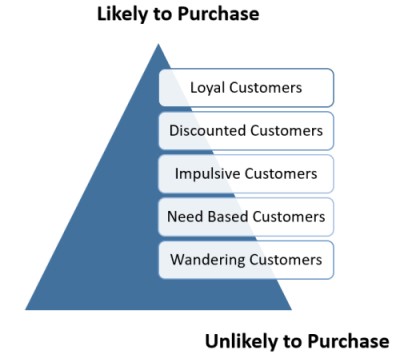
- Impulsive Customers- These customers are difficult to convince as they want to do the business in urge or caprice. They don’t have any specific item into their product list but urge to buy what they find good and productive at that point of time.
Handling these customers is a challenge as they are not particularly looking for a product and want the supplier to display all the useful products they have in their tally in front of them so that they can buy what they like from that display.
If impulsive customers are treated accordingly then there is high probability that these customers could be a responsible for high percentage of selling.
- Need Based Customers- These customers are product specific and only tend to buy items only to which they are habitual or have a specific need for them.
These are frequent customers but do not become a part of buying most of the times so it is difficult to satisfy them.
These customers should be handled positively by showing them ways and reasons to switch to other similar products and brands and initiating them to buy these.
These customers could possibly be lost if not tackled efficiently with positive interaction.
- Wandering Customers- These are the least profitable customers as sometimes they themselves are not sure what to buy.
These customers are normally new in industry and most of the times visit suppliers only for confirming their needs on products.
They investigate features of most prominent products in the market but do not buy any of those or show least interest in buying.
To grab such customers they should be properly informed about the various positive features of the products so that they develop a sense of interest.
An organization should always focus on loyal customers and should expand or multiply the product range to leverage impulsive customers.
For other types of customers strategies should be renovated and enhanced for turning out these customers to satisfy their needs and modify these types of customers to let them fall under loyal and impulsive category.